After weeks of planning hotel rooms, airport transfers, and dinner reservations, I had one last moment of doubt: Can you really just bring people together and expect connection to happen?
It turns out you can.
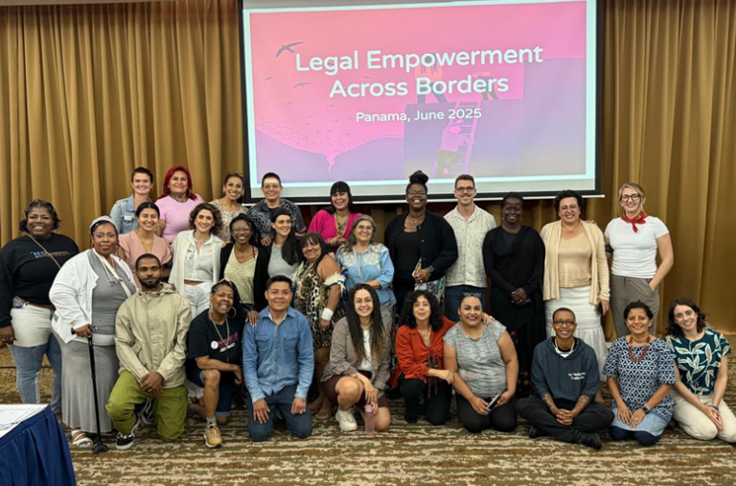
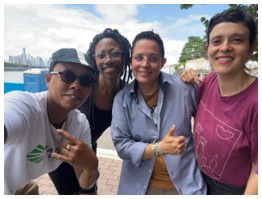
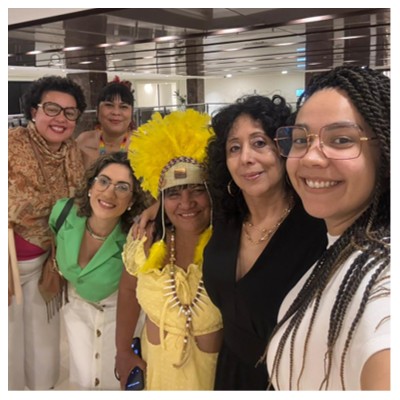
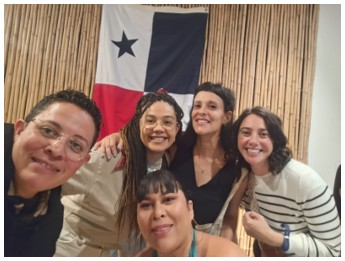
The Legal Empowerment Fund, in partnership with the Bernstein Institute for Human Rights at New York University, brought together 12 organizations from Brazil, Mexico, and the United States that support incarcerated and formerly incarcerated women and their families.
For some participants, it was their first time leaving their home country. For others, it was their first time being in a room full of people who understood their experiences—because they had lived versions of the same struggles themselves. That recognition was powerful. Despite speaking different languages and working in different systems, participants immediately found common ground in the shared challenges of injustice, stigma, and exclusion. That shared understanding became a source of strength.
The convening took place over three days in Panama City, with interpretation in English, Spanish, and Portuguese. It wasn’t simple to manage, but it was essential. The process of pausing, waiting, and repeating became part of how people learned to listen to one another. Participants downloaded Google Translate to help with informal conversations and kept finding ways to make sure no one was left out. Those small efforts built trust from the start.
Sessions were organized around eight key strategies for legal empowerment identified through earlier collaboration. Among these, jailhouse lawyering, participatory defense, litigation, and advocacy sparked particular interest from participants who wanted to adapt them to their own work.
Each organization brought a different perspective and experience to the room.
- In Brazil, AFAPARO, APMF, and THEMIS shared how they empower women—especially Black and Indigenous women—to navigate unjust systems through community organizing and legal education. THEMIS’s Popular Legal Promoters program, for example, trains women in prisons to use legal tools to defend their rights.
- In Mexico, INSADE, CAMT Chihuahua, and CEA Justicia Social spoke about their community-based advocacy with women affected by incarceration and violence. CAMT works with women in state prisons and their families to build access to justice, while CEA Justicia shared plans for its second Community Justice School—a space rooted in collaboration and developed alongside universities.
- In the United States, the California Coalition of Women Prisoners (CCWP), Defying Legal Gravity, Homegirlz del Corazón, LEAH, RISE Collective, and Women Who Never Give Up discussed their work connecting legal advocacy, mentorship, and participatory defense to create networks of support that extend beyond the prison walls.
Across discussions, one shared belief stood out: solutions to justice problems work best when they center the people directly affected and build collective—not individual—power.
Structured sessions were balanced with time for care and reflection. Participants wrote letters to themselves, shared poetry, and sang together. These small acts helped everyone slow down and remember that collective care isn’t separate from justice work—it sustains it.
The convening also led to new collaborations. CEA Justicia Social, inspired by conversations with the Jailhouse Lawyers Initiative and Bernstein Institute team, is developing a second Community Justice School to deepen community engagement through legal empowerment. CCWP, CAMT Chihuahua, and CEA Justicia Social have started building a cross-border network focused on advocacy, care, and legal support for women deported from California.
By the final day, participants had begun co-designing a toolkit to share the lessons learned—practical examples and strategies developed collectively. The toolkit will reflect the input of all twelve organizations to ensure that grassroots knowledge leads the process.
Participants left Panama reenergized and connected. Many said it was the first time they saw their struggles reflected so clearly in the work of others, and that realizing those shared experiences helped them see how collective action can reshape harmful systems.
What started as a logistical challenge became something much more: a space for listening, patience, and solidarity. When people come together with openness and care, connection doesn’t just happen—it creates a foundation for shared strength and change.