When Paola became a mother, her health provider denied her claim for maternity leave. She asked again and was rejected. Eventually, the provider granted her 14 days—of paternity leave.
Paola, an Afro-descendant woman, became a mother through ROPA, an assisted reproduction method: she contributed the egg, and her partner, Andrea, carried their child. When their baby was born prematurely and Andrea experienced medical complications, Paola lactated and cared for both her child and her partner. Yet Colombian law did not fully recognize her role in the family.
Assigning Paola paternity rather than maternity benefits reflected a system built around narrow definitions of motherhood, family, reproduction and care. Care is central to family life in Colombia, but legal and institutional systems do not always recognize how families actually provide it.
For ILEX Acción Jurídica, a grantee partner of the Legal Empowerment Fund (LEF), Paola’s case was about more than parental leave. It raised deeper questions: Who is recognized as a mother and caregiver, whose families are protected, and whose realities are reflected in the law?
When inequalities intersect: race, sexuality, and care
Paola’s experience shows how overlapping systems of exclusion can shape access to care and social protection.
In Colombia, Black women have historically sustained care economies despite systemic neglect, while lesbian couples have been excluded from traditional legal definitions of family. When these compounding exclusions overlap, they can determine whose motherhood is recognized and whose caregiving is protected.
ILEX approached Paola’s case by focusing on the rights to equality, non-discrimination, care, maternity and social security, alongside the reinforced protection of her child. They reframed her claim as a question of constitutional rights, rather than simply access to a benefit.
Paola and Andrea’s experience as a Black lesbian couple was central to that approach. It connected racial and reproductive justice with the right to care, while challenging the assumptions institutions use to define motherhood and family.
“This is not only a case about parental leave or formal recognition. It is about racial justice, reproductive justice, and care justice,” said Paola.
From an individual claim to constitutional change
Paola’s path to justice was far from straightforward.
After lower courts rejected her claims, ILEX brought her case to Colombia’s Constitutional Court, which selected it for review in August 2025. The organization framed her experience using broader constitutional questions about equality, non-discrimination, care and the recognition of diverse families.
This approach is central to the way ILEX pursues strategic legal action: by connecting an individual experience of exclusion to systemic issues, they can challenge the structures that allow those problems to persist.
In March 2026, the Constitutional Court issued Judgment SU-068 of 2026. It found that Paola’s health provider had violated her rights to care, equality, and social security by automatically assigning her paternity leave without properly considering her family’s circumstances.
While the justices did not find sufficient evidence that the health provider’s actions were motivated by racial prejudice, their intersectional analysis nevertheless acknowledged the broader inequalities shaping Paola’s experience. That distinction matters: recognizing structural discrimination does not mean overlooking the court’s specific findings.
The ruling upheld care as a fundamental right and affirmed protections for non-gestating mothers in circumstances such as Paola’s. It challenged the automatic equation of maternity with pregnancy and childbirth, and called on the Congress of Colombia to develop a parental leave system that recognizes diverse families and promotes shared responsibility for care.
What comes next
The implications of this decision extend beyond Paola’s family. By successfully challenging the assumptions behind the parental leave system, groups like ILEX have stronger grounds for future litigation, advocacy, and policy changes that reflect diverse families and recognize care as a fundamental right.
Because this fight is far from over. The ruling does not resolve every gap in the system. Legal recognition must translate into fairer institutional practice and access to rights. Its wider impact will depend on how institutions respond and how Congress acts on the court’s call for reform.
For ILEX, this means continuing to use legal action to advance structural racial and social justice and challenge the systems that determine whose lives and families are recognized and protected. Paola’s case shows what legal empowerment can make possible: bringing the structures behind an experience of exclusion before the law, and creating stronger grounds for others to demand rights and recognition.
As Paola and Andrea wrote in a letter to their son after the ruling in their favor, the decision opened a path for “other families, other babies, other ways of caring.”
About ILEX Acción Jurídica
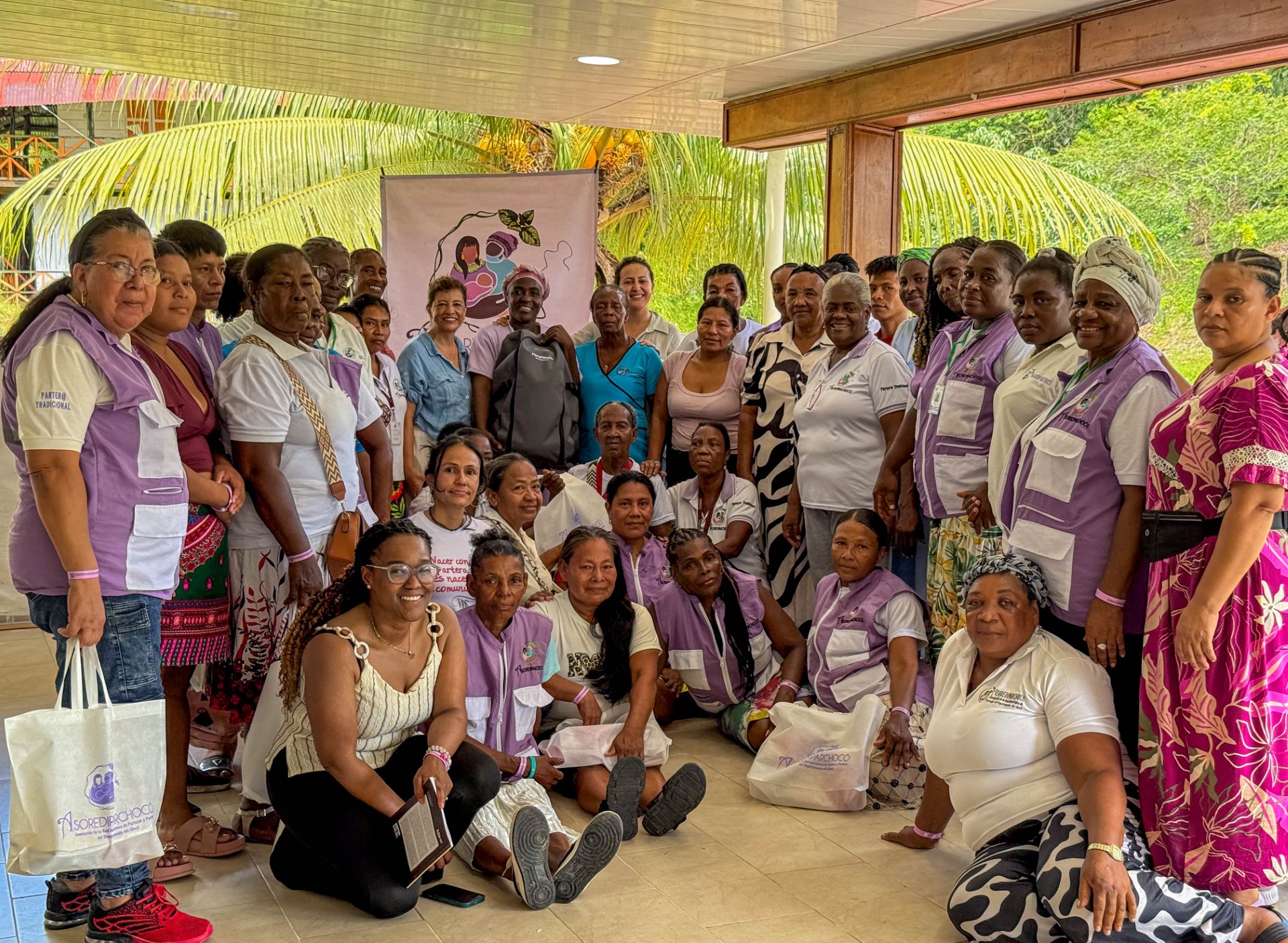
ILEX Acción Jurídica is a Colombian organization advancing racial justice through strategic legal action, research, and advocacy. It works with Afro-descendant communities to challenge structural discrimination, address racial inequality, and promote legal and social change.
This story was produced by the Legal Empowerment Fund in collaboration with ILEX Acción Jurídica.